
Introduction
The keyword SDM Full Form is one of the most searched government job related topics in India. Many students, competitive exam aspirants, and job seekers want to understand what SDM stands for, what responsibilities an SDM performs, how to become one, and what career opportunities this prestigious administrative position offers. An SDM plays a crucial role in maintaining law and order, implementing government policies, supervising revenue administration, and ensuring smooth functioning at the subdivision level. This comprehensive guide explains the full form of SDM, eligibility criteria, selection process, responsibilities, powers, salary, career growth, and frequently asked questions to help you understand this respected government position.
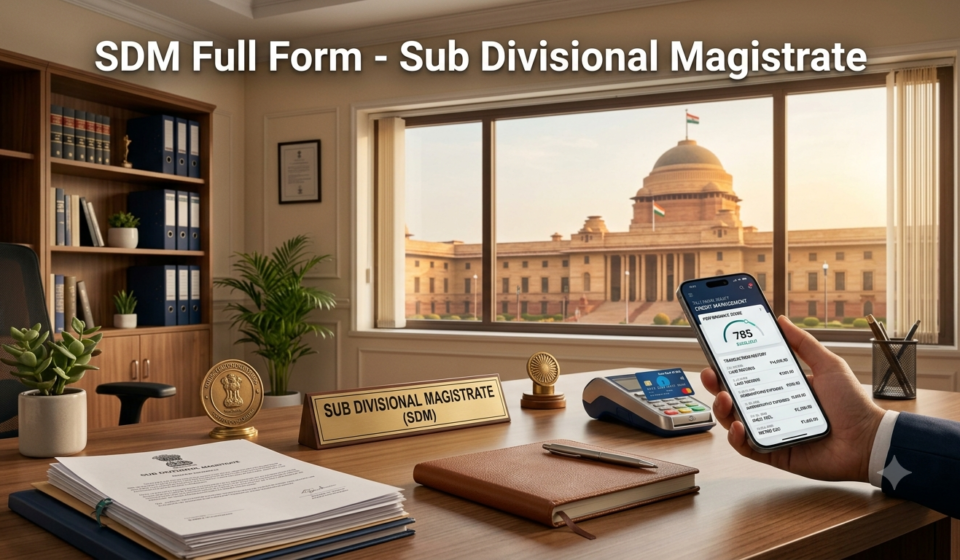
SDM Full Form
The full form of SDM is Sub Divisional Magistrate.
An SDM is a senior administrative officer responsible for managing a subdivision within a district. The officer works under the District Magistrate or District Collector and performs various executive, administrative, judicial, and revenue related duties.
The position is considered one of the most respected administrative posts in the state government system.
What Is an SDM?
A Sub Divisional Magistrate is responsible for maintaining administration within a subdivision of a district.
The officer supervises:
- Revenue administration
- Law and order
- Disaster management
- Election duties
- Land records
- Government schemes
- Public grievance redressal
- Executive magistrate functions
The SDM serves as an important link between the district administration and the public.
Roles and Responsibilities of an SDM
An SDM performs numerous administrative responsibilities.
Maintaining Law and Order
The SDM helps maintain peace within the subdivision and coordinates with the police administration whenever necessary.
Revenue Administration
Revenue related responsibilities include:
- Land record management
- Property mutation
- Land acquisition
- Revenue collection
- Settlement of land disputes
Implementing Government Schemes
The SDM monitors the implementation of various central and state government welfare programs.
Election Duties
During elections, the SDM supervises electoral arrangements and ensures free and fair voting.
Disaster Management
The officer coordinates emergency response during floods, earthquakes, fires, and other disasters.
Public Grievance Redressal
Citizens can approach the SDM for various administrative issues requiring government intervention.
Powers of an SDM
The Sub Divisional Magistrate has several important legal and administrative powers.
These include:
- Issuing executive orders
- Supervising revenue administration
- Handling land related disputes
- Enforcing Section 144 when authorized under applicable law
- Conducting inquiries
- Supervising disaster relief operations
- Coordinating with government departments
These powers help ensure effective administration within the subdivision.
Eligibility to Become an SDM
Candidates must meet certain eligibility requirements.
Educational Qualification
Applicants should possess a bachelor’s degree from a recognized university.
Graduates from any discipline can apply.
Age Limit
The age limit depends on the examination through which the candidate applies and the applicable reservation category.
Age relaxations are provided according to government rules.
Nationality
Applicants must satisfy the nationality requirements specified in the recruitment notification.
How to Become an SDM
There are two common pathways.
Through the UPSC Civil Services Examination
Candidates who qualify for the Civil Services Examination may join the Indian Administrative Service. During their career progression, they may serve as SDMs depending on state cadre assignments.
Through State Public Service Commission Examinations
Many states recruit officers through State Civil Services examinations. Successful candidates are often appointed as Sub Divisional Magistrates or equivalent administrative officers after training.
Selection Process
The recruitment process generally includes:
Preliminary Examination
An objective examination used for screening candidates.
Main Examination
A descriptive examination testing analytical and administrative knowledge.
Interview
Qualified candidates attend a personality test before final selection.
Training
Selected candidates undergo administrative training before official posting.
Skills Required to Become an SDM
Successful SDMs possess several important qualities.
These include:
- Leadership
- Decision making ability
- Communication skills
- Problem solving
- Administrative knowledge
- Public service mindset
- Time management
- Integrity
These skills help officers perform their responsibilities efficiently.
Salary of an SDM
The salary of an SDM varies depending on the state government, pay level, allowances, and years of service.
Generally, the salary package includes:
- Basic pay
- Dearness allowance
- House rent allowance
- Travel allowance
- Medical benefits
- Government accommodation in many postings
- Official vehicle in eligible assignments
Additional benefits may vary by state and service rules.
Career Growth
An SDM enjoys excellent career progression.
Possible promotions include:
- Additional District Magistrate
- District Magistrate or Collector
- Divisional Commissioner
- Secretary level administrative positions
Promotions depend on service record, experience, and government policies.
Benefits of Becoming an SDM
Working as an SDM offers numerous advantages.
Prestigious Government Position
The role carries significant respect and responsibility.
Job Security
Government administrative services offer stable long term careers.
Opportunity to Serve Society
SDMs directly contribute to public welfare and development.
Attractive Salary and Benefits
Government officers receive competitive salaries and additional allowances.
Career Advancement
Administrative services provide excellent promotion opportunities.
Challenges Faced by an SDM
The position also involves several responsibilities.
Common challenges include:
- Handling public grievances
- Managing emergencies
- Resolving land disputes
- Maintaining law and order
- Implementing government policies efficiently
- Working under time sensitive situations
Strong leadership helps officers manage these responsibilities effectively.
Preparation Tips for SDM Aspirants
Candidates preparing for civil services should focus on:
- Indian Polity
- History
- Geography
- Economy
- Current Affairs
- General Science
- Ethics
- Answer writing practice
Regular newspaper reading and mock tests also improve preparation.
Why the SDM Position Is Highly Respected
The SDM plays a vital role in district administration.
Reasons for its popularity include:
- Administrative authority
- Public service opportunities
- Leadership responsibilities
- Career stability
- High social respect
- Opportunity to implement government policies
These factors make SDM one of the most sought after government careers in India.
Conclusion
The SDM Full Form is Sub Divisional Magistrate, a prestigious administrative position responsible for maintaining law and order, managing revenue administration, implementing government schemes, and serving the public at the subdivision level. Becoming an SDM requires dedication, strong preparation, and success in competitive civil service examinations. With excellent career growth, attractive benefits, and the opportunity to make a positive impact on society, the role continues to attract thousands of aspiring civil servants every year.
Frequently Asked Questions
1. What is the full form of SDM?
SDM stands for Sub Divisional Magistrate.
2. What does an SDM do?
An SDM manages revenue administration, maintains law and order, supervises government schemes, handles land related matters, and performs executive magistrate duties within a subdivision.
3. How can I become an SDM?
You can become an SDM by qualifying through the UPSC Civil Services Examination or your State Public Service Commission examination, depending on the recruitment system in your state.
4. What qualification is required to become an SDM?
A bachelor’s degree from a recognized university is generally required.
5. Is the SDM a government officer?
Yes. An SDM is a government administrative officer serving under the district administration.
6. Is the SDM post a good career?
Yes. It is considered one of the most respected government careers because it offers job security, career growth, attractive benefits, and the opportunity to serve the public.