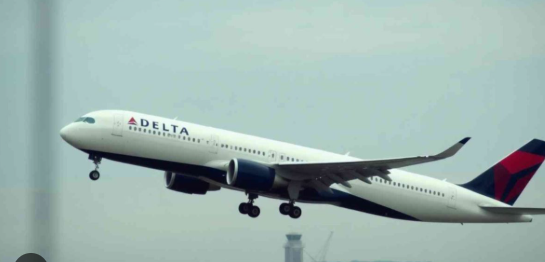

Long-haul international flights occasionally change course when pilots identify technical, medical, weather, or operational concerns. One incident that attracted significant attention involved Delta Flight DL275 diverted LAX while operating a trans-Pacific service from Detroit to Tokyo.
The Airbus A350-900 was flying toward Tokyo Haneda when the crew encountered a reported engine anti-ice system problem. Instead of continuing across the Pacific, the aircraft diverted to Los Angeles International Airport and landed safely.
What Happened to Delta Flight DL275
Delta Air Lines Flight DL275 was operating its scheduled route from Detroit Metropolitan Wayne County Airport to Tokyo Haneda Airport.
During the flight, a technical issue involving the engine anti-ice system was reported. The aircraft changed course and flew to Los Angeles rather than continuing to Japan.
Aviation reporting identified the aircraft as an Airbus A350-900 with registration N508DN. The flight landed safely at LAX.
Delta Flight DL275 Quick Facts
| Category | Information |
|---|---|
| Airline | Delta Air Lines |
| Flight Number | DL275 |
| Original Route | Detroit to Tokyo Haneda |
| Departure Airport | DTW |
| Planned Destination | HND |
| Diversion Airport | LAX |
| Aircraft | Airbus A350-900 |
| Registration | N508DN |
| Reported Issue | Engine anti-ice system problem |
| Outcome | Safe landing |
What Caused the DL275 Diversion
Aviation reports linked the diversion to a problem with the anti-ice system associated with the aircraft’s Rolls-Royce Trent XWB engines.
The Aviation Herald reported that passengers were told about a problem involving the engine anti-ice systems.
An anti-ice system is important because aircraft can encounter extremely cold conditions and atmospheric moisture at altitude.
What Is an Engine Anti-Ice System
Aircraft engine anti-ice systems are designed to reduce dangerous ice accumulation in susceptible engine areas.
Ice formation can affect airflow and engine operation under certain atmospheric conditions. Modern aircraft use systems and operating procedures to manage icing risks.
A warning or malfunction involving anti-ice equipment therefore requires careful evaluation by the flight crew.
Where Was DL275 When the Problem Occurred
Aviation A2Z reported that the Airbus A350 was cruising at flight level 380, approximately 620 nautical miles southwest of Anchorage, when the diversion decision was made.
Flight level 380 generally corresponds to approximately 38,000 feet under standard flight-level conventions.
The aircraft was already operating in the North Pacific region, making the diversion a significant route change.
Why Did DL275 Divert to LAX
The exact operational decision-making process inside the airline and cockpit is not fully available in public reporting.
However, Los Angeles is a major international airport with long runways and extensive airline and aircraft support infrastructure.
For a long-haul Airbus A350, maintenance capability and passenger handling can be important factors when selecting a diversion airport.
Why Did the Plane Not Continue to Tokyo
Continuing a long oceanic flight after identifying a technical problem can expose the aircraft to extended periods far from suitable airports.
Pilots and airline operations teams evaluate the nature of the fault, weather, fuel, airport suitability, maintenance resources, and other operational factors.
The decision to divert does not necessarily mean an engine was failing. It means the crew determined that changing the flight plan was the appropriate response to the reported technical condition.
Was Delta Flight DL275 an Emergency
Some online articles describe the event using dramatic terms such as a major emergency.
Available aviation reporting more specifically identifies an engine anti-ice problem and a diversion. The aircraft subsequently landed safely.
It is better to describe the event as a technical diversion unless official records provide a more specific emergency classification.
Did DL275 Land Safely
Yes. The Airbus A350 reached Los Angeles and landed safely.
No crash occurred as part of the incident described in aviation reports.
The remaining scheduled service to Tokyo was cancelled after the diversion, according to The Aviation Herald.
Were There Any Injuries
Reliable aviation reports reviewed for this article do not describe passenger or crew injuries connected with the diversion.
The main consequence was the interruption of the Detroit to Tokyo journey.
Passengers faced travel disruption because the aircraft did not reach its original destination as scheduled.
What Aircraft Operated Delta Flight DL275
The flight was operated by an Airbus A350-900.
Flight-history information also identifies the A359 aircraft type as regularly associated with Delta’s DL275 Detroit to Tokyo Haneda service.
The A350 is a twin-engine wide-body aircraft designed for long-distance international operations.
What Engines Are Used on the Aircraft
The reported aircraft used Rolls-Royce Trent XWB engines.
The Trent XWB family was specifically developed for the Airbus A350 platform.
In the DL275 incident, aviation reporting associated the technical concern with the engine anti-ice system rather than publicly describing a complete engine failure.
What Does Flight Level 380 Mean
Flight levels are used to describe aircraft altitude based on a standard atmospheric pressure setting.
FL380 represents a nominal altitude of 38,000 feet.
Long-haul aircraft frequently operate at high cruising altitudes because these levels can support efficient flight operations.
The Original DL275 Route
DL275 operates between Detroit Metropolitan Wayne County Airport and Tokyo Haneda Airport.
FlightAware history identifies DL275 as a Detroit to Haneda service commonly operated with an Airbus A350-900.
The route covers a long trans-Pacific distance and typically involves many hours of flight time.
Why Long-Haul Diversions Attract Attention
A diversion on a short domestic route may involve a relatively small route change.
A trans-Pacific diversion can look much more dramatic on a flight-tracking map. The aircraft may travel hundreds or thousands of additional miles depending on its position and selected airport.
This explains why the DL275 flight path attracted attention among aviation enthusiasts.
Flight Tracking and the DL275 Incident
Flight-tracking services allow users to follow aircraft routes and observe unexpected course changes.
When DL275 changed direction, online aviation communities began discussing why the aircraft was flying toward Los Angeles instead of Tokyo.
Public flight tracking can show the route, altitude, and other available data, but it does not always immediately reveal the technical reason for a diversion.
How Pilots Respond to Technical Warnings
Modern aircraft provide flight crews with system alerts and technical information.
Pilots follow established procedures and checklists when a warning appears. They may also communicate with airline operational and maintenance teams when appropriate.
The response depends on the specific system, aircraft condition, weather, fuel, and location.
Does a Diversion Mean an Aircraft Is Unsafe
Not automatically.
A diversion is a risk-management action. Pilots may divert because continuing to the original destination is no longer the preferred operational choice.
Technical warnings, passenger medical problems, weather, and airport closures can all lead to diversions.
What Happened After the LAX Landing
The remaining portion of the scheduled flight was cancelled, according to aviation reporting.
The aircraft required attention following the reported technical issue. Passenger travel plans were therefore disrupted.
Specific rebooking arrangements can differ between passengers and should be confirmed through the airline.
Passenger Rights After a Diversion
Passenger options depend on the itinerary, ticket conditions, reason for disruption, and applicable regulations.
Travelers affected by a diversion should keep boarding passes, receipts, airline messages, and rebooking information.
For current assistance and flight management, passengers should use the official Delta Air Lines website or contact the airline directly.
Difference Between Diversion and Cancellation
A diversion occurs when a flight lands at an airport other than its planned destination.
A cancellation means a scheduled flight or remaining service does not operate as planned.
In this incident, DL275 diverted to LAX, and aviation reporting states that the remaining flight was cancelled.
Why Accurate Reporting Matters
Many websites have published articles about DL275 with conflicting dates, passenger numbers, landing times, and technical claims.
Some details are repeated without clear sourcing. For example, different pages describe the event as occurring on May 26, May 27, or May 28.
Aviation-focused reports place the event around May 26–27, 2025. Claims about exact passenger counts or dramatic engine failure should be treated carefully unless supported by reliable records.
Is DL275 Still a Delta Flight Number
Yes. Flight history sources continue to identify DAL275 as a Delta service between Detroit and Tokyo Haneda.
A single diversion does not necessarily result in the permanent removal of a flight number.
Schedules and aircraft assignments can still change over time.
Why People Search for the DL275 Diversion
The unusual flight path generated interest among travelers and aviation enthusiasts.
People wanted to understand why a Detroit to Tokyo flight ended up in Los Angeles. The reported anti-ice issue also created questions about aircraft icing systems and long-haul aviation safety.
Online articles and flight-tracking discussions further increased interest in the incident.
Final Thoughts
The Delta Flight DL275 diverted LAX incident involved an Airbus A350-900 operating from Detroit to Tokyo Haneda. Aviation reports indicate that the crew diverted to Los Angeles after a reported problem involving the engine anti-ice system while the aircraft was flying in the North Pacific region.
The aircraft landed safely at LAX, and the remaining service was cancelled. The incident demonstrates how flight crews can change a long-haul route when a technical condition requires further assessment. It is also important to separate verified aviation reporting from unsupported details repeated across online articles.
Frequently Asked Questions
Why was Delta Flight DL275 diverted to LAX?
Aviation reports indicate that the flight diverted because of a reported problem involving the engine anti-ice system.
Where was DL275 originally flying?
The flight was operating from Detroit Metropolitan Wayne County Airport to Tokyo Haneda Airport.
What aircraft operated Delta Flight DL275?
The incident involved an Airbus A350-900 identified in aviation reporting as registration N508DN.
Did Delta Flight DL275 land safely?
Yes. The aircraft diverted to Los Angeles International Airport and landed safely.
Was there a complete engine failure on DL275?
Available aviation reporting describes an engine anti-ice system problem. It does not establish that the aircraft suffered a complete engine failure.