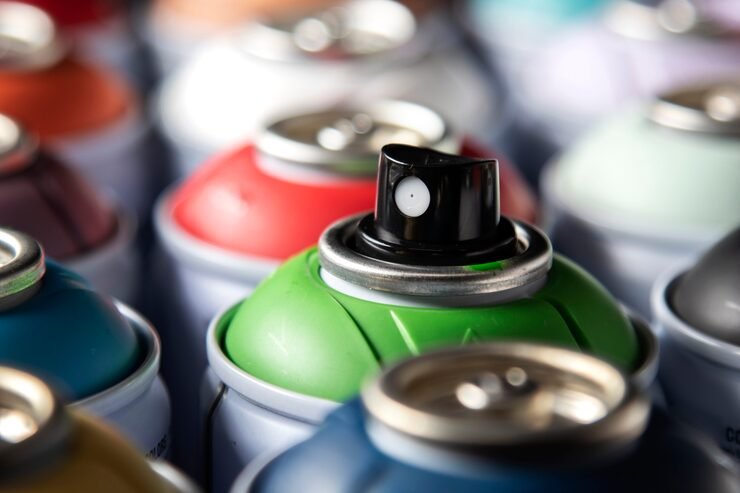

Finding the right paint for a repair can be challenging when a standard color does not quite match the existing surface. colour matched spray cans provide a convenient solution by allowing paint to be produced according to a specific manufacturer code, color reference, or physical sample. Custom-mixed aerosol paints are available for applications ranging from vehicle repairs to household surfaces, furniture, metalwork, and other small restoration projects. Modern suppliers can match colors using systems such as RAL, Pantone, British Standard, NCS, and vehicle manufacturer codes.
What Are Colour Matched Spray Cans?
A custom-matched spray can contains paint that has been mixed to closely reproduce an existing color. Instead of selecting a generic red, blue, white, or black from a shelf, you provide a recognized color code or, in some cases, a physical sample.
The paint supplier then uses the relevant color system or matching equipment to create an aerosol suitable for the intended application.
This approach can be especially useful when repairing a small damaged area where repainting an entire surface would be unnecessary or expensive.
For automotive applications, matching can often be performed using the vehicle’s manufacturer paint code. Some specialist suppliers also offer matching based on registration information or physical samples.
How Does Custom Colour Matching Work?
The matching process generally begins with identifying the original color.
There are several ways to do this:
- Find the manufacturer’s color code.
- Provide a recognized color-system reference.
- Supply a physical paint sample.
- Have the existing surface assessed by a professional color-matching service.
- Select the required finish, such as gloss, satin, or matte.
A known color code is usually preferable because it provides a defined reference. However, an older painted surface may have changed over time because of sunlight, weather, cleaning, oxidation, or previous repairs.
For that reason, matching a physical sample can sometimes provide a better practical result than relying only on the original code.
Common Uses for Custom-Matched Aerosols
Custom paint aerosols are useful in many different situations.
| Application | Typical Purpose |
|---|---|
| Automotive repairs | Scratches, chips, panels, bumpers |
| Furniture | Touch-ups and refinishing |
| Metalwork | Matching existing equipment |
| Home improvement | Small decorative repairs |
| Industrial surfaces | Maintenance and restoration |
| Powder-coated surfaces | Minor color corrections |
| Hobby projects | Models and custom parts |
Automotive repairs are one of the most common applications. Custom aerosols can be used for small scratches, chips, scuffs, and localized panel repairs when a complete repaint is unnecessary.
Custom-matched aerosols are also used for powder-coated surfaces and building materials where maintaining a consistent appearance is important.
Choosing the Correct Colour Code
The quality of a color match depends heavily on the information provided to the supplier.
Manufacturer Codes
Automotive manufacturers assign specific paint codes to vehicle colors. These codes can identify colors that may look very similar but have different formulations.
For a vehicle repair, finding the correct code is therefore an important first step.
RAL Colors
RAL is widely used for standardized colors across many applications. It can be particularly useful for industrial, architectural, and general painting projects.
Pantone and Other Systems
Some custom paint suppliers work with Pantone, NCS, British Standard, Federal Standard, and other recognized color references. Availability depends on the supplier and paint system.
Physical Samples
If no reliable code is available, a physical sample may be useful. The supplier can assess the sample and create a paint mixture intended to reproduce its appearance.
Why Exact Color Matching Can Be Difficult
Even when you have the correct color code, an exact visual match is not always guaranteed.
One reason is aging. Paint exposed to sunlight and weather can gradually change its appearance.
Another issue is the difference between the original paint formulation and the surface being repaired. A vehicle, for example, may have been repainted at some point in its history.
Other factors include:
- Surface preparation
- Primer color
- Paint thickness
- Application technique
- Gloss level
- Lighting conditions
- Age of the existing finish
- Clear-coat condition
- Environmental exposure
A new paint application can therefore look slightly different even when the underlying color formula is correct.
Understanding Paint Finish
Color is only one part of the final appearance. The finish also matters.
A surface may have a:
- Gloss finish
- Satin finish
- Matte finish
- Metallic finish
- Pearlescent finish
- Textured finish
Two paints can have nearly identical colors but look noticeably different if one is glossy and the other is matte.
Automotive paint can be particularly complex because metallic and pearl effects change how the surface reflects light.
Before ordering, confirm both the color and the required finish.
Primer, Basecoat, and Clearcoat
A professional-looking repair often involves more than one layer.
Primer
Primer helps prepare the surface and can improve adhesion. It can also provide a consistent foundation for the color coat.
Basecoat
The basecoat provides the primary color. Depending on the paint system, several thin coats may be preferable to one heavy application.
Clearcoat
A clear protective layer may be applied over certain automotive and other paint systems. It can provide protection and influence the final gloss level.
Not every project requires all three products, so always follow the instructions for the particular paint system being used.
How to Prepare a Surface Before Spraying
Preparation is one of the most important parts of achieving a good result.
Start by cleaning the surface thoroughly. Dirt, grease, wax, silicone, and loose material can interfere with adhesion.
Depending on the project, preparation may involve:
- Washing the surface
- Degreasing
- Removing loose paint
- Sanding damaged areas
- Repairing dents or imperfections
- Applying suitable primer
- Cleaning away sanding dust
- Masking surrounding areas
Poor preparation can make even a high-quality paint look uneven.
How to Apply Spray Paint Properly
Once the surface is ready, application technique becomes important.
Hold the can according to the manufacturer’s instructions and maintain a consistent spraying distance. Move the can smoothly rather than concentrating on one spot.
Several light coats are generally easier to control than one excessively thick coat.
A basic process is:
- Prepare and clean the surface.
- Mask surrounding areas.
- Shake the aerosol thoroughly.
- Test the spray on a suitable surface if recommended.
- Apply a light coat.
- Allow the recommended drying time.
- Apply additional coats as instructed.
- Apply clearcoat when appropriate.
- Allow the finished surface to cure.
The exact drying and recoating times depend on the formulation, temperature, humidity, and manufacturer instructions.
Colour Matched Aerosols for Car Repairs
Vehicle owners frequently use custom aerosols for localized repairs.
They can be useful for:
- Door scratches
- Bumper scuffs
- Small chips
- Mirror covers
- Trim pieces
- Motorcycle components
- Minor panel repairs
Automotive paint suppliers commonly offer products matched to vehicle manufacturers’ color codes. Some ranges include acrylic formulations and other systems designed for specific automotive applications.
However, aerosol paint should not automatically be considered a replacement for professional bodywork. Large dents, extensive corrosion, major panel damage, and significant color differences may require professional refinishing.
Benefits of Custom-Matched Spray Paint
There are several advantages to using a customized aerosol.
Better Color Coordination
The main benefit is the ability to reproduce a specific existing color rather than relying on a generic shade.
Convenient Application
Aerosols are ready to use and do not require a separate spray gun for many small projects.
Suitable for Small Repairs
A small can can be practical when only a limited amount of paint is required.
Reduced Waste
Buying a small quantity can make more sense than purchasing a large container of paint for a minor repair.
Wide Range of Colors
Custom paint services can cover large numbers of manufacturer and standardized colors. Some suppliers advertise tens of thousands of available vehicle colors.
Limitations to Consider
Custom aerosols are useful, but they have limitations.
A color match may not appear perfect if the original surface has faded or has previously been repainted.
Spray technique also affects the result. Uneven application can create differences in texture, gloss, or coverage.
In addition, some specialized finishes require more advanced equipment or professional application.
For large or highly visible repairs, a professional painter may be able to achieve a more seamless transition.
Tips for Getting the Best Match
If you want the best possible result, preparation should begin before ordering the paint.
Keep the following tips in mind:
- Find the correct color code whenever possible.
- Tell the supplier what material you are painting.
- Specify the desired finish.
- Mention whether the surface is metallic or pearlescent.
- Provide a clean physical sample when code information is unavailable.
- Ask whether primer is required.
- Check whether clearcoat is recommended.
- Test the product on a less visible area when practical.
- Follow the manufacturer’s application instructions.
- Allow sufficient curing time before handling the repaired surface.
Storage and Safety Considerations
Aerosol paint should be treated as a chemical product and handled responsibly.
Always read the product label before use. Spray painting should be performed in an appropriate, well-ventilated environment, away from ignition sources and other hazards identified by the manufacturer.
Do not assume that all aerosol formulations have identical safety requirements. Different paint systems can have different ventilation, protective-equipment, storage, and disposal instructions.
Store unused cans according to the manufacturer’s recommendations and keep them away from excessive heat.
Colour Matching for Home and Furniture Projects
Custom aerosols are not limited to cars.
They can also be useful for home improvement projects. A homeowner might want to repair a painted metal fixture, furniture component, decorative item, or another surface without repainting everything.
For these projects, providing a sample can be particularly helpful when the original color does not have a known code.
Paint stores may be able to match a physical sample and produce the required paint in an aerosol format. Some retailers specifically offer custom matching for samples brought into a store.
Table: Choosing the Right Custom Aerosol
| Project Type | Information to Provide | Important Consideration |
|---|---|---|
| Car repair | Vehicle paint code | Confirm finish and clearcoat |
| Furniture repair | Existing color or sample | Consider material compatibility |
| Metal equipment | RAL or manufacturer code | Check primer requirements |
| Home decoration | Paint sample or color reference | Test before large application |
| Powder-coated surface | Coating color reference | Expect possible finish variation |
| Hobby project | Color reference and material | Use compatible paint system |
When Should You Choose Professional Painting?
DIY aerosols can work very well for small repairs, but professional painting may be more appropriate for larger projects.
Consider professional assistance when:
- The damaged area is large.
- The surface has significant rust.
- A panel requires extensive bodywork.
- The color is highly complex.
- The finish involves multiple layers.
- The repair is in a highly visible area.
- You need a seamless factory-style finish.
Professional painters have access to specialized equipment, controlled environments, color-matching systems, and techniques for blending new paint into existing finishes.
Key Points to Remember
- A custom aerosol can be matched using a color code or physical sample.
- Vehicle manufacturer paint codes are useful for automotive repairs.
- RAL, Pantone, NCS, and other color systems can be used for different projects.
- The original surface may have faded, making a perfect visual match more difficult.
- Finish is just as important as color.
- Surface preparation strongly affects the final result.
- Multiple light coats can provide better control than one heavy coat.
- Primer and clearcoat requirements depend on the paint system.
- Custom aerosols are particularly convenient for small repairs.
- Large or complex repairs may be better handled by a professional.
Final Thoughts
Custom-matched aerosol paint can make small repair and restoration projects considerably easier. Instead of settling for a generic shade, you can work from a manufacturer code, standardized color reference, or physical sample to obtain paint designed to closely coordinate with an existing surface.
The best results come from combining accurate color information with careful surface preparation, the correct primer and finish, and proper spraying technique. For automotive repairs, identifying the manufacturer’s paint code is an important starting point, while older surfaces may require additional consideration because their appearance can change over time.
Whether you are repairing a small vehicle scratch, restoring furniture, touching up metalwork, or maintaining a painted surface, selecting the correct color and finish can make the repaired area look much more consistent with the surrounding material.
Frequently Asked Questions
What are custom-matched spray cans used for?
They are commonly used for small repairs and restoration projects where the new paint needs to closely match an existing color. Applications include vehicles, furniture, metalwork, building surfaces, and hobby projects.
How do I find the correct color for my car?
The manufacturer’s paint code is usually the best starting point. The location of the code varies by vehicle manufacturer and model. A specialist paint supplier can then use the code to prepare the appropriate aerosol.
Can a spray can perfectly match old paint?
Not always. The original paint may have faded, oxidized, or been previously repaired. A correct formula can provide a close match, but surface condition, finish, application technique, and lighting can affect the final appearance.
Do I need primer before using custom spray paint?
It depends on the surface and the paint system. Primer may improve adhesion and coverage, particularly on repaired, bare, or difficult surfaces. Always follow the manufacturer’s instructions for the specific product.
Are custom spray cans suitable for large repairs?
They can be useful for small areas, but large or highly visible repairs may benefit from professional refinishing. A professional can use specialized equipment and blending techniques to achieve a more consistent finish.


[…] Read more: Colour Matched Spray Cans: A Complete Guide to Choosing and Using Custom Paint […]
[…] Read more:Colour Matched Spray Cans: A Complete Guide to Choosing and Using Custom Paint […]