
A childhood trauma test can help you reflect on experiences from your early years that may still influence your emotions, relationships, and daily life. While no online self-assessment can diagnose trauma or mental health conditions, a thoughtfully designed questionnaire can increase self-awareness and encourage meaningful conversations with a qualified mental health professional.
Many adults don’t realize that certain emotional patterns, trust issues, anxiety, perfectionism, or difficulty managing stress may have roots in childhood experiences. Understanding those connections is often the first step toward healing. This guide explains what a childhood trauma test is, what it measures, how to interpret results, common symptoms of unresolved childhood trauma, and evidence-based ways to begin recovery.
What Is a Childhood Trauma Test?
A childhood trauma test is a self-assessment designed to help people identify experiences that may have had a lasting emotional or psychological impact during childhood.
Rather than providing a medical diagnosis, these questionnaires encourage reflection on events such as neglect, emotional abuse, physical abuse, bullying, household instability, exposure to violence, or the loss of a caregiver.
Most tests ask about:
- Emotional experiences during childhood
- Family relationships
- Feelings of safety at home
- Exposure to conflict or violence
- Emotional neglect
- Physical neglect
- Significant losses
- Long-term emotional effects
The goal is not to label someone but to help recognize patterns that may deserve further exploration.
Featured Snippet: Can a Childhood Trauma Test Diagnose Trauma?
No. A childhood trauma test cannot diagnose trauma or any mental health condition. It is a self-screening tool that helps identify experiences and symptoms commonly associated with childhood trauma. A licensed mental health professional is qualified to perform a comprehensive assessment and provide an accurate diagnosis when appropriate.
Why Childhood Trauma Can Affect Adult Life
The brain develops rapidly during childhood. When children experience chronic stress, fear, neglect, or abuse, their developing nervous system may adapt in ways that continue into adulthood.
These adaptations may once have helped a child survive difficult situations but can later become obstacles in everyday life.
Adults with unresolved childhood trauma may experience:
- Anxiety
- Depression
- Difficulty trusting others
- Fear of abandonment
- Emotional numbness
- Low self-esteem
- Perfectionism
- People-pleasing behaviors
- Difficulty setting boundaries
- Relationship challenges
- Chronic stress
- Sleep problems
Not everyone who experiences childhood adversity develops long-term trauma. Protective relationships, resilience, and early support can significantly reduce long-term effects.
Common Childhood Experiences That May Be Traumatic
Trauma looks different for everyone. Two children can experience the same event but respond differently depending on age, personality, support systems, and other factors.
Examples include:
Emotional Abuse
Repeated criticism, humiliation, rejection, manipulation, or verbal attacks can deeply affect a child’s sense of worth.
Physical Abuse
Intentional physical harm can create lasting emotional and psychological consequences beyond physical injuries.
Sexual Abuse
Any unwanted sexual contact or exploitation during childhood can have profound lifelong effects and requires compassionate professional support.
Emotional Neglect
A child’s emotional needs may be ignored when caregivers consistently fail to provide comfort, validation, affection, or emotional support.
Physical Neglect
Lack of food, shelter, medical care, supervision, or basic necessities may contribute to traumatic experiences.
Household Dysfunction
Growing up in homes affected by addiction, domestic violence, mental illness, incarceration, or chronic conflict can create persistent stress.
Bullying
Repeated bullying at school or online may significantly impact confidence, emotional security, and mental health.
Loss or Separation
The death of a loved one, abandonment, divorce, foster care placement, or prolonged separation from caregivers may become traumatic experiences.
Signs You May Benefit From a Childhood Trauma Test
Many adults don’t immediately connect current emotional struggles with childhood experiences.
You might consider taking a self-assessment if you frequently experience:
- Constant self-criticism
- Difficulty trusting people
- Fear of rejection
- Emotional overwhelm
- Panic attacks
- Persistent anxiety
- Relationship conflicts
- Emotional numbness
- Difficulty expressing feelings
- Hypervigilance
- Frequent guilt or shame
- Trouble relaxing
- Flashbacks or intrusive memories
- Strong reactions to criticism
- Difficulty saying no
- Chronic people-pleasing
Having one or several of these signs does not automatically mean childhood trauma is present. Many mental health conditions share similar symptoms.
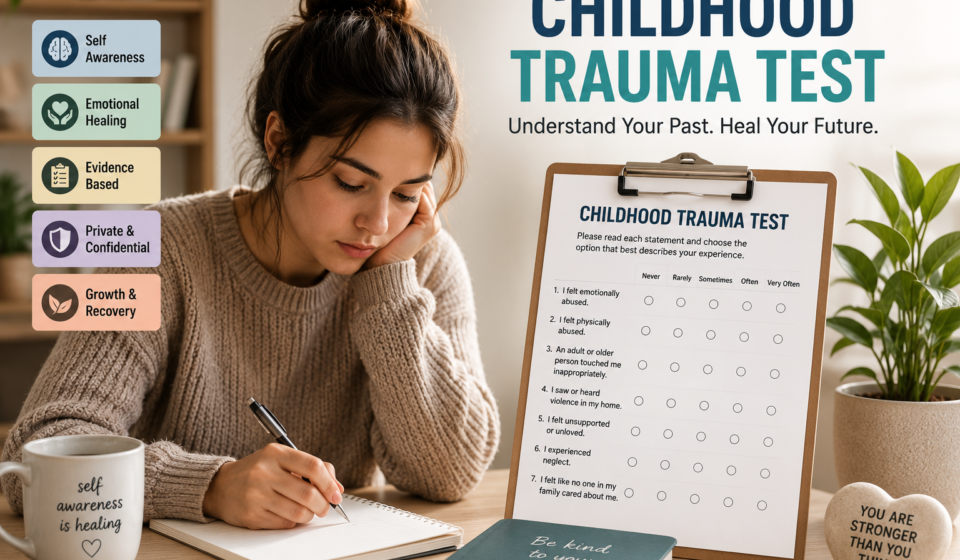
Sample Childhood Trauma Test Questions
Many self-assessments include questions like these. Answer each honestly based on your childhood experiences.
- Did you often feel unsafe at home?
- Were your emotions dismissed or ignored?
- Did you experience physical punishment that caused fear?
- Were you frequently criticized or humiliated?
- Did caregivers struggle with addiction or severe mental illness?
- Did you witness domestic violence?
- Did you often feel responsible for adult problems?
- Were your basic emotional needs unmet?
- Did you avoid expressing emotions because you feared punishment?
- Do childhood memories still cause emotional distress today?
These questions are intended for self-reflection rather than diagnosis.
How to Interpret Childhood Trauma Test Results
Most online tests divide scores into general categories.
Low Score
A lower score may suggest fewer reported adverse childhood experiences. However, it does not guarantee that difficult experiences had no emotional impact.
Moderate Score
A moderate score may indicate meaningful childhood stressors that continue to influence emotional well-being.
Reflecting on these experiences and discussing them with a therapist may provide valuable insight.
High Score
Higher scores often indicate multiple adverse experiences or ongoing emotional distress connected to childhood events.
A higher score does not define your future or mean recovery is impossible. Instead, it may suggest that professional support could be especially beneficial.
Childhood Trauma and the ACE Score
One of the best-known frameworks related to childhood adversity is the Adverse Childhood Experiences (ACE) study.
ACE scores measure exposure to categories of childhood adversity, including abuse, neglect, and household dysfunction.
Higher ACE scores have been associated with increased risks for certain physical and mental health conditions across populations. However, the score should never be viewed as a prediction of an individual’s future health.
Many people with high ACE scores lead healthy, fulfilling lives, especially when they have supportive relationships and access to appropriate care.
How Childhood Trauma Can Affect Relationships
Unresolved childhood experiences may shape how adults connect with others.
Some common patterns include:
Fear of Abandonment
Small disagreements may trigger intense fear that loved ones will leave.
Difficulty Trusting
People may struggle to believe others have good intentions.
Avoiding Emotional Intimacy
Some individuals keep emotional distance to avoid being hurt.
People-Pleasing
Constantly prioritizing others’ needs can become a survival strategy learned during childhood.
Emotional Reactivity
Stressful situations may trigger emotional responses that seem stronger than expected.
Recognizing these patterns is often the first step toward healthier relationships.
Physical Symptoms Linked to Childhood Trauma
Trauma affects both the mind and body.
Some people experience:
- Chronic muscle tension
- Frequent headaches
- Digestive issues
- Fatigue
- Difficulty sleeping
- Increased stress response
- Rapid heartbeat during conflict
- Chronic pain
- Difficulty concentrating
These symptoms can have many possible causes, so medical evaluation is important when symptoms persist.
Healthy Ways to Begin Healing
Healing is rarely a straight line, but many people make significant progress over time.
Helpful approaches include:
Therapy
Working with a licensed therapist can help process difficult experiences, develop coping skills, and improve emotional regulation.
Journaling
Writing about thoughts, emotions, and memories can increase self-awareness.
Building Healthy Relationships
Supportive friendships and safe relationships can gradually rebuild trust.
Mindfulness
Practices like meditation, breathing exercises, and grounding techniques may reduce stress and improve emotional awareness.
Exercise
Regular physical activity supports both physical and mental well-being.
Healthy Sleep Habits
Consistent sleep routines help regulate mood and stress.
Self-Compassion
Replacing self-criticism with kindness can be an important part of recovery.
When Should You Seek Professional Help?
Consider speaking with a mental health professional if childhood memories:
- Frequently interfere with work or school
- Affect relationships
- Cause panic attacks
- Lead to persistent depression
- Create overwhelming anxiety
- Trigger nightmares
- Result in emotional numbness
- Cause thoughts of self-harm or hopelessness
A trained professional can determine whether symptoms are related to trauma or another condition and recommend appropriate treatment.
Common Myths About Childhood Trauma
Myth: Only severe abuse causes trauma.
Reality: Emotional neglect, bullying, chronic criticism, and other experiences can also have lasting emotional effects.
Myth: If you don’t remember your childhood, nothing happened.
Reality: Memory gaps can occur for many reasons and do not automatically indicate trauma.
Myth: Strong people simply get over trauma.
Reality: Healing is influenced by biology, support systems, life experiences, and access to treatment—not personal strength alone.
Myth: Childhood trauma affects everyone the same way.
Reality: Every person’s response is unique. Two individuals can experience the same event and have very different outcomes.
How to Choose a Reliable Childhood Trauma Test
If you decide to use an online self-assessment, look for one that:
- Clearly states it is not a diagnostic tool
- Is based on established psychological research
- Explains how results should be interpreted
- Encourages professional evaluation when needed
- Protects user privacy
- Avoids making exaggerated claims
Be cautious of quizzes that promise instant diagnoses or guarantee specific mental health conditions.
Conclusion
A childhood trauma test can be a valuable starting point for understanding how early experiences may continue to influence your thoughts, emotions, relationships, and overall well-being. While these self-assessments cannot diagnose trauma, they can encourage meaningful self-reflection and help identify patterns worth discussing with a qualified mental health professional. Healing is possible at every stage of life, and many people find that greater awareness leads to healthier relationships, improved emotional resilience, and a stronger sense of self. Whether your results suggest minimal concerns or significant childhood adversity, remember that seeking support is a sign of strength, not weakness. Understanding your past does not define your future—it can become the foundation for lasting growth and recovery.
Frequently Asked Questions
Is a childhood trauma test accurate?
A childhood trauma test can provide helpful self-reflection, but it is not a medical diagnosis. Results should be viewed as a starting point rather than a final answer.
Can childhood trauma affect adults years later?
Yes. Childhood trauma can influence emotional health, relationships, stress responses, self-esteem, and coping strategies well into adulthood.
What is the difference between childhood trauma and adverse childhood experiences?
Adverse childhood experiences refer to specific categories of difficult events during childhood. Trauma describes an individual’s emotional and psychological response to those experiences, which varies from person to person.
Can childhood trauma be treated?
Yes. Many people benefit from therapy, healthy relationships, stress management techniques, and other evidence-based approaches that support recovery.
Should I see a therapist after taking a childhood trauma test?
If your results raise concerns or if childhood memories continue to affect your daily life, speaking with a licensed mental health professional is a good next step. They can provide a personalized assessment and recommend appropriate support.